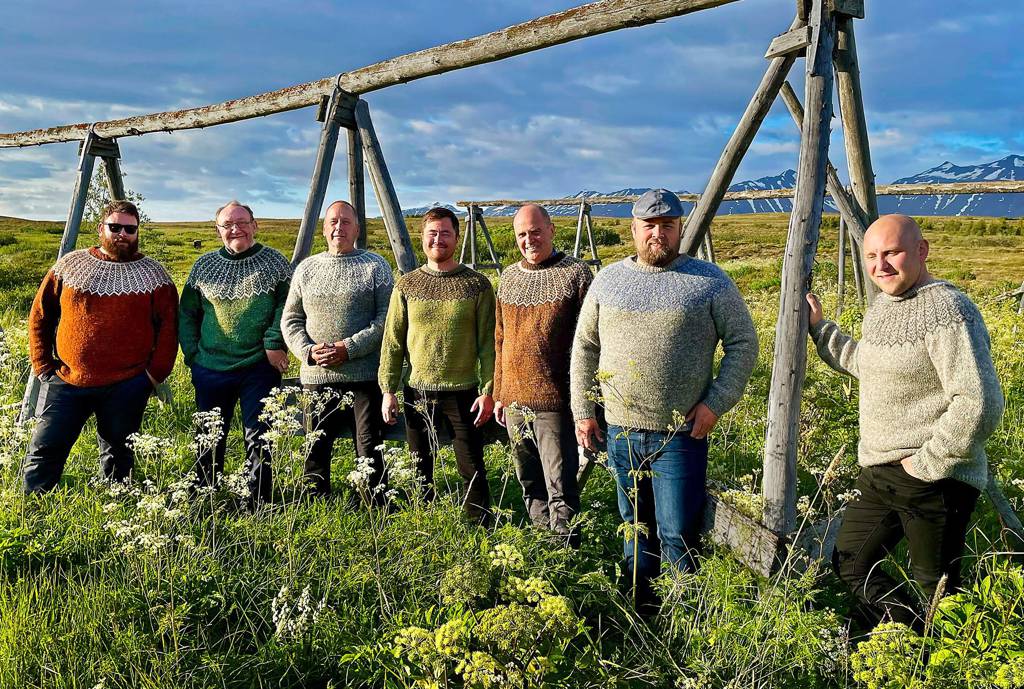
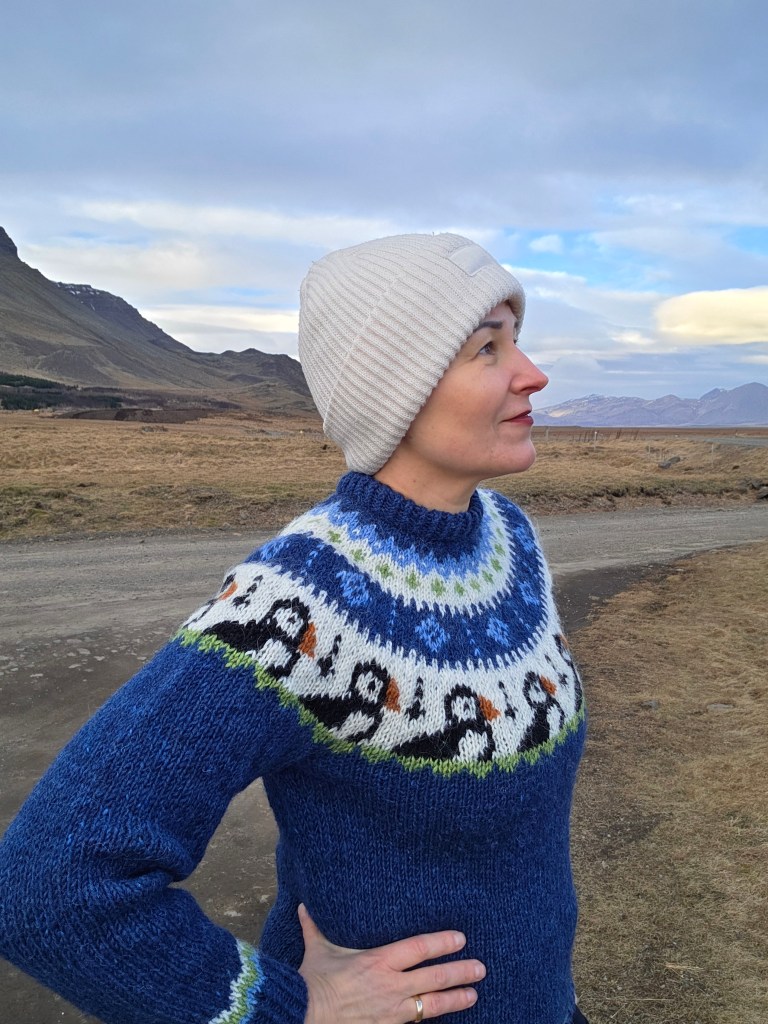
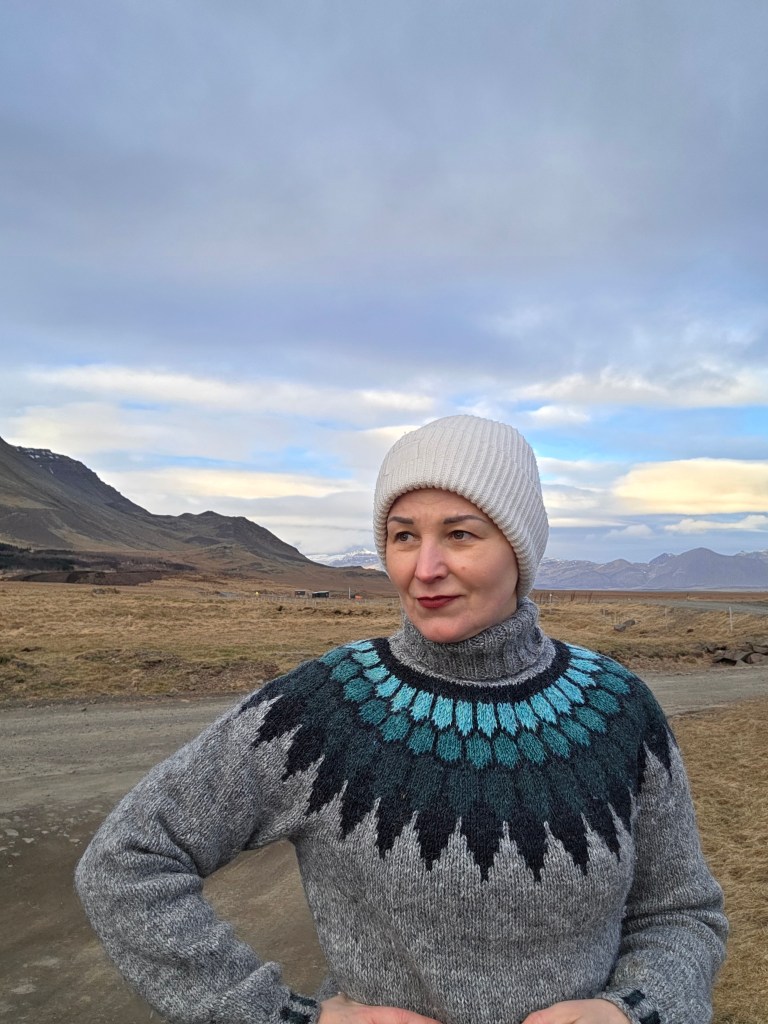
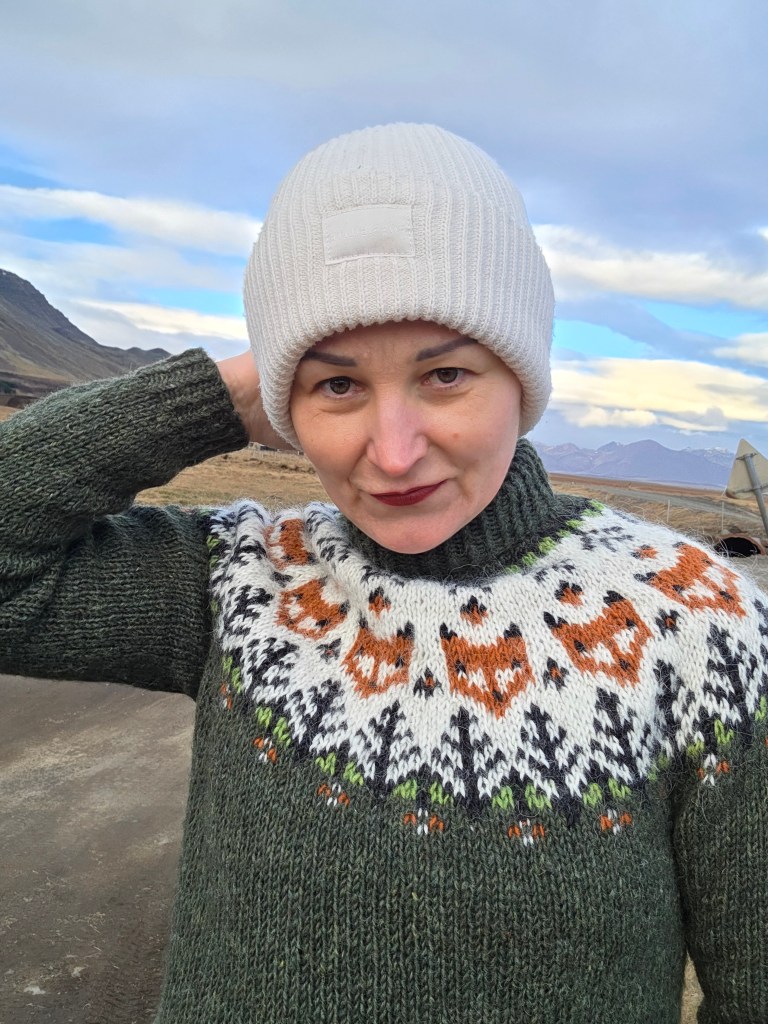
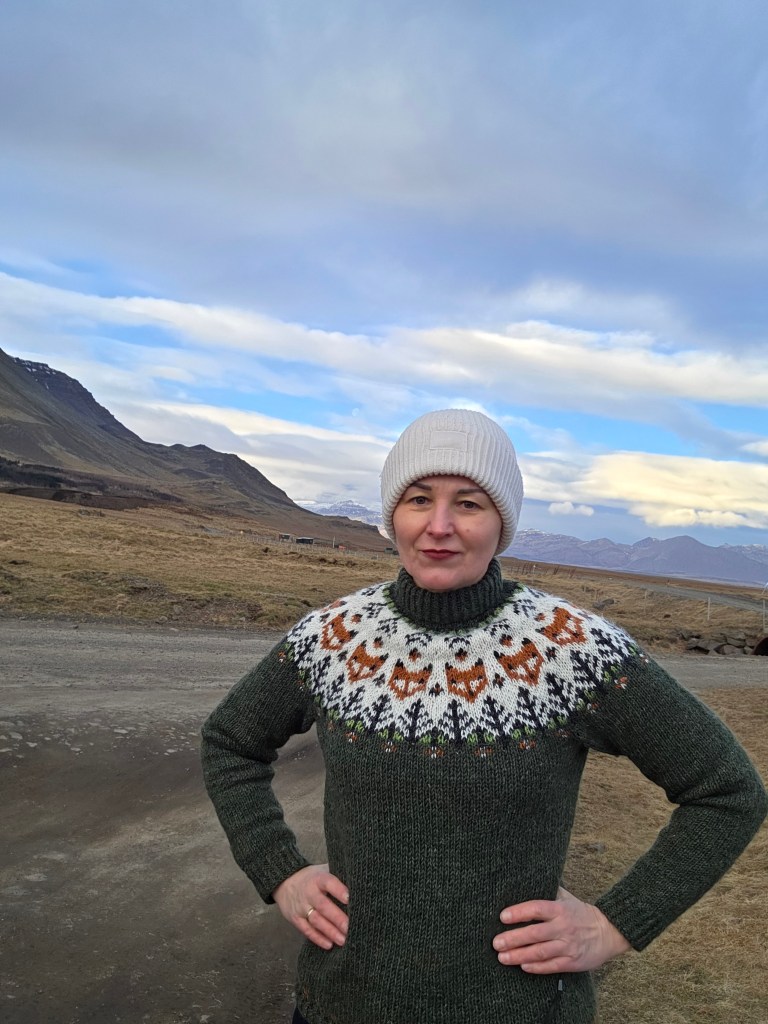
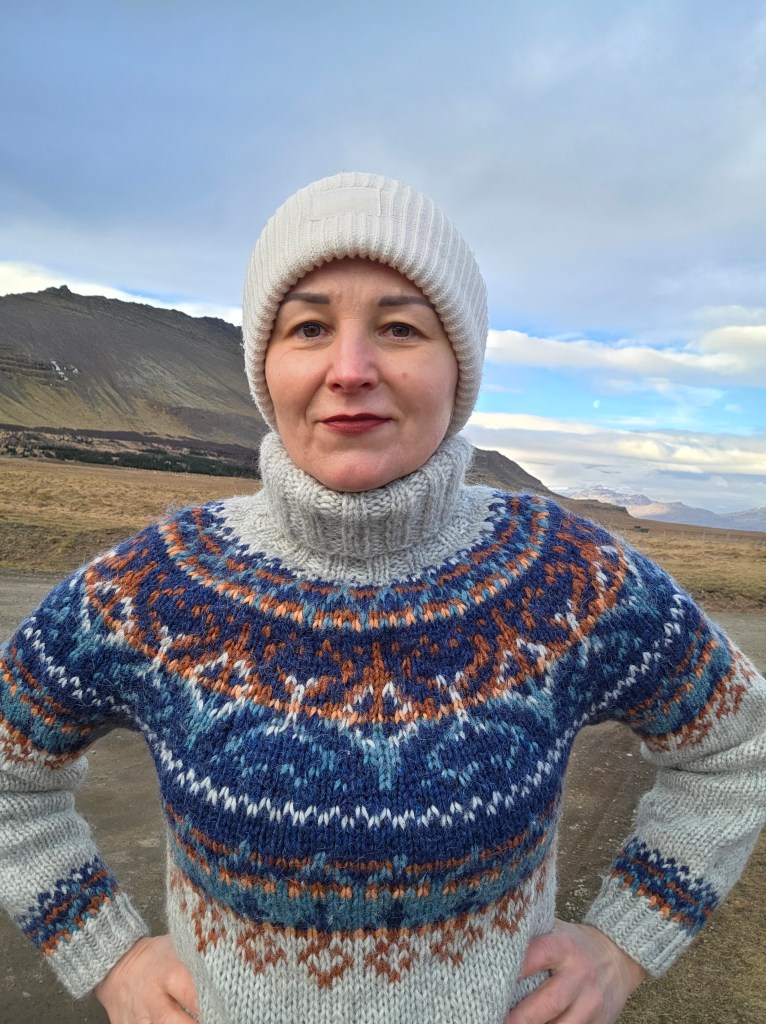
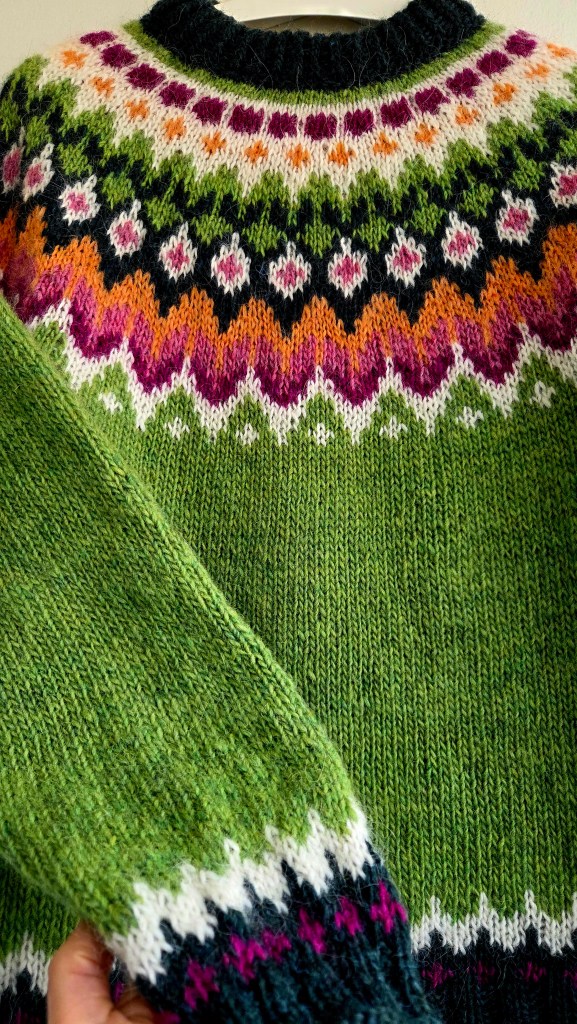
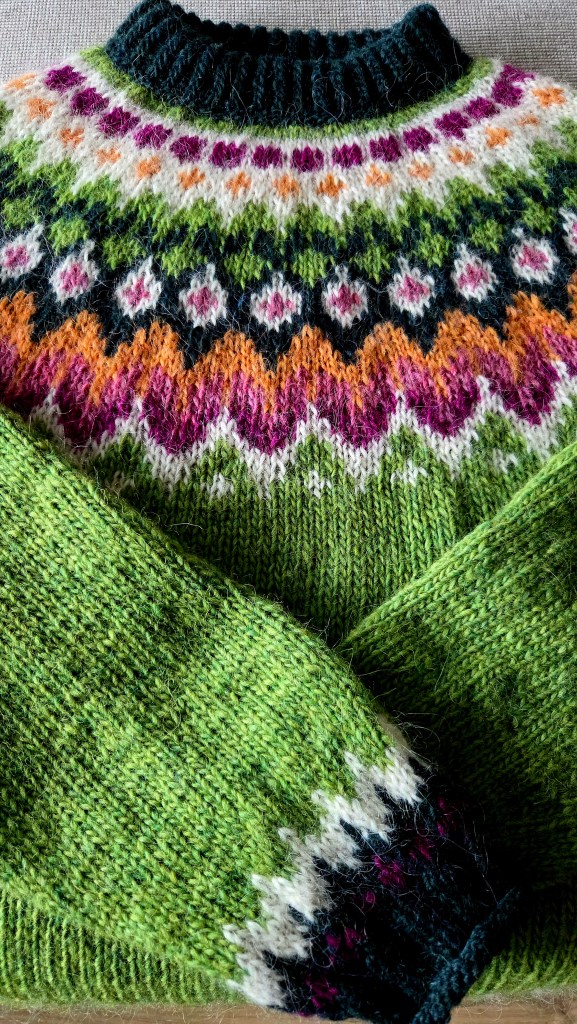
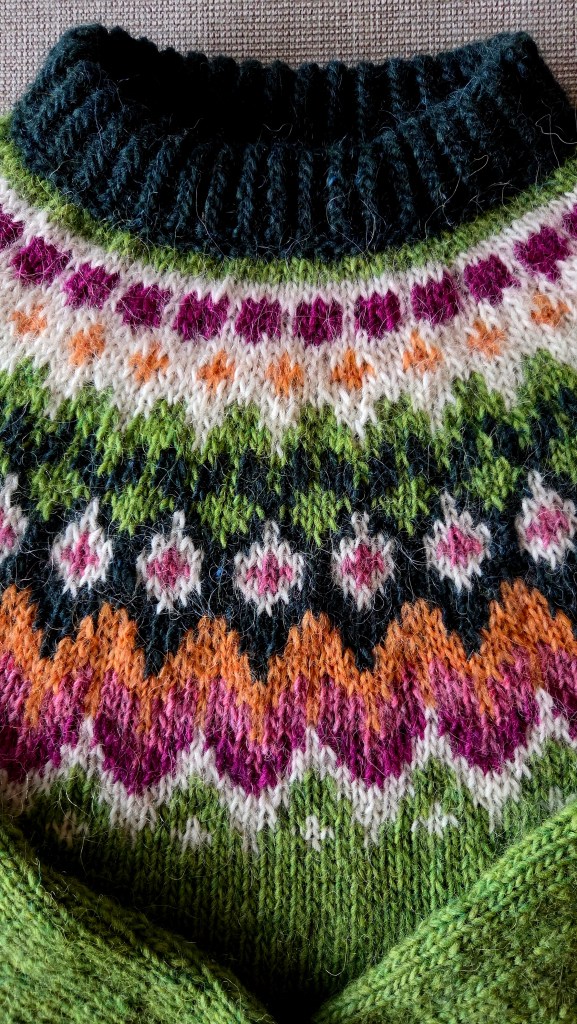
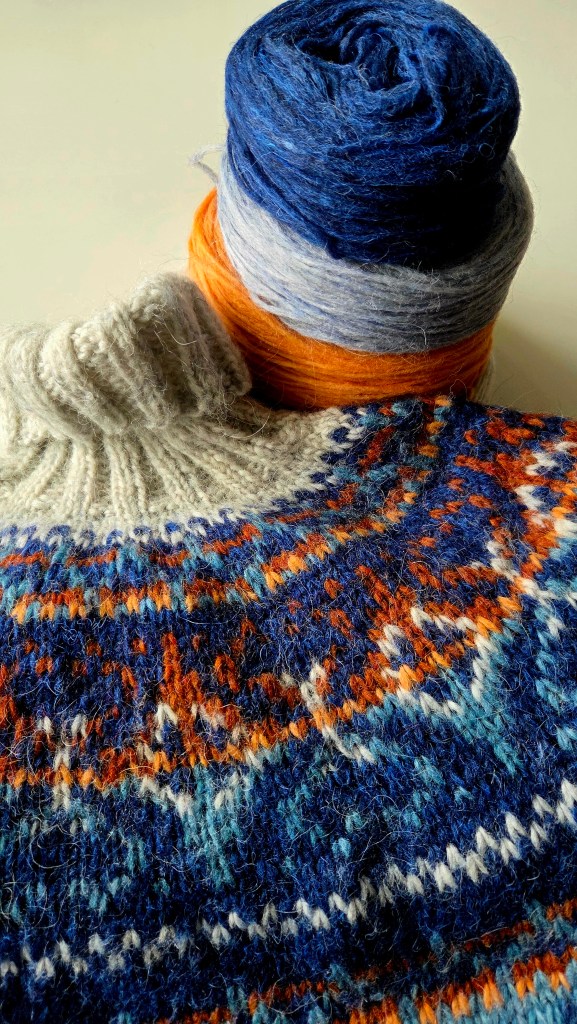
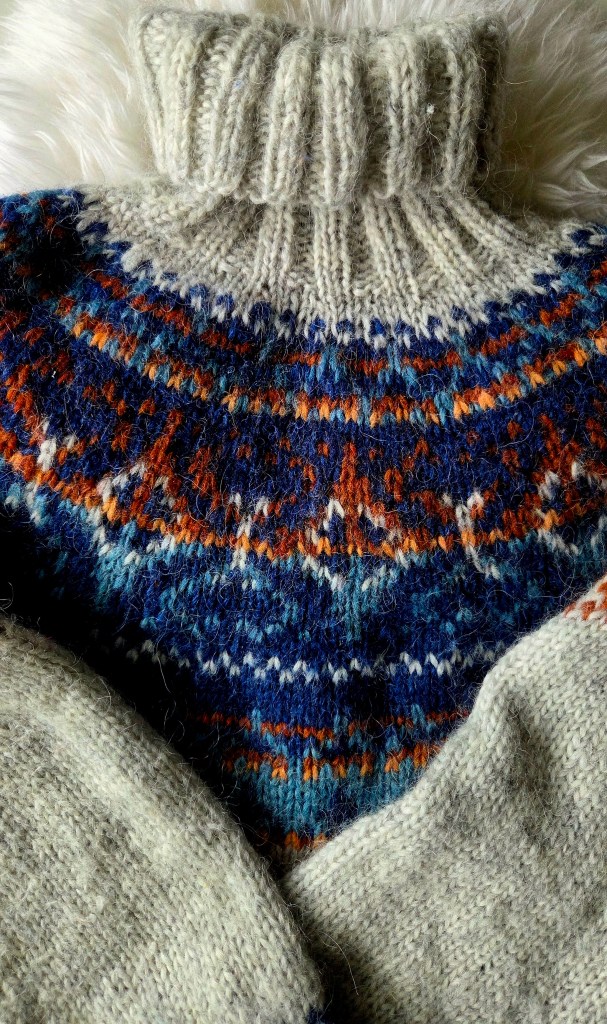
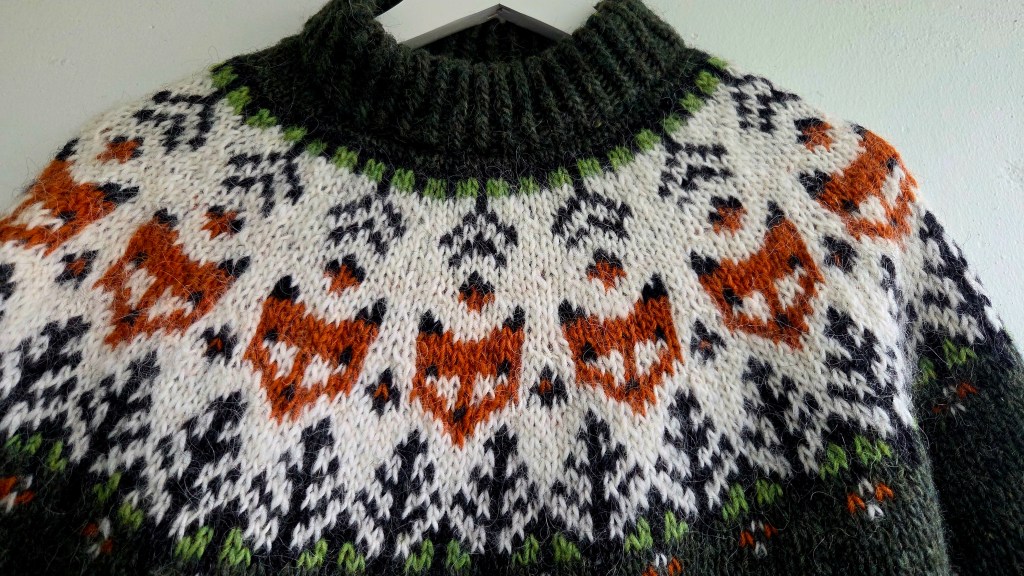
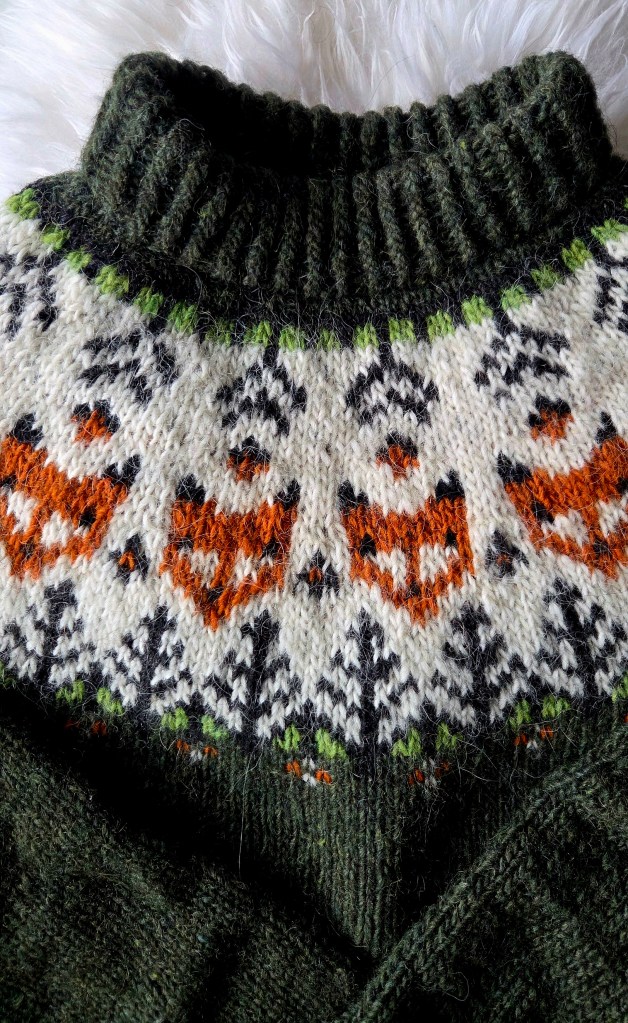
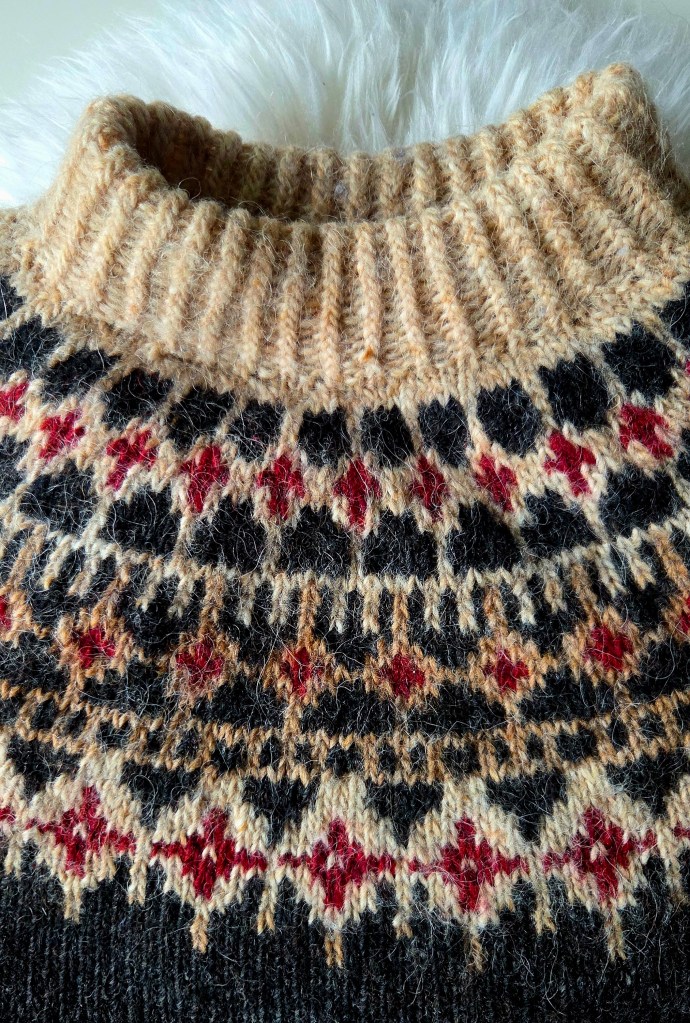
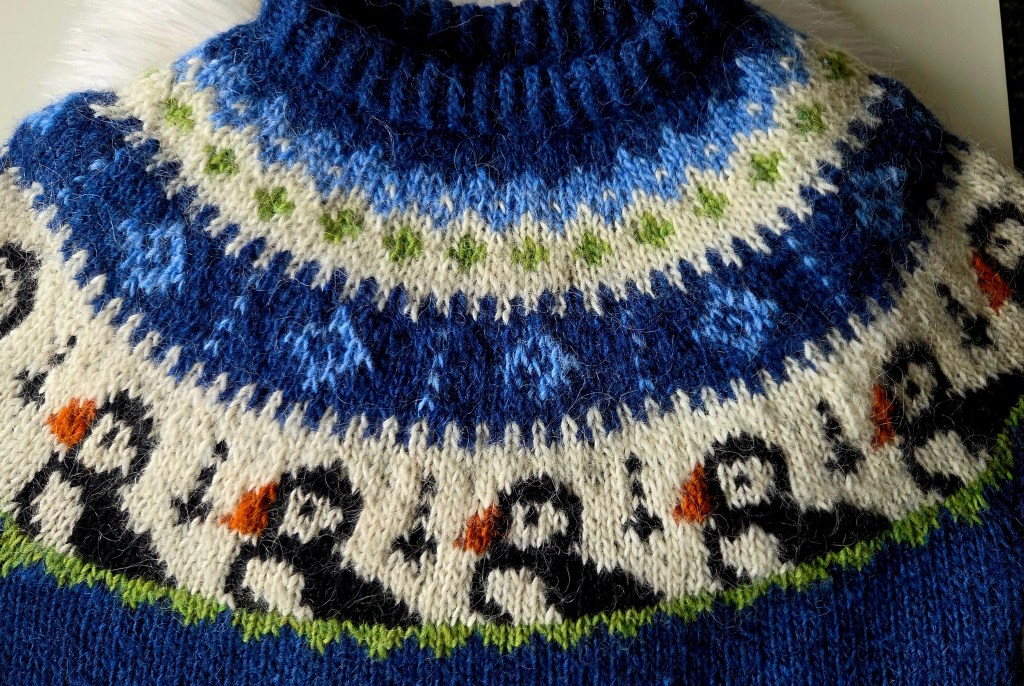
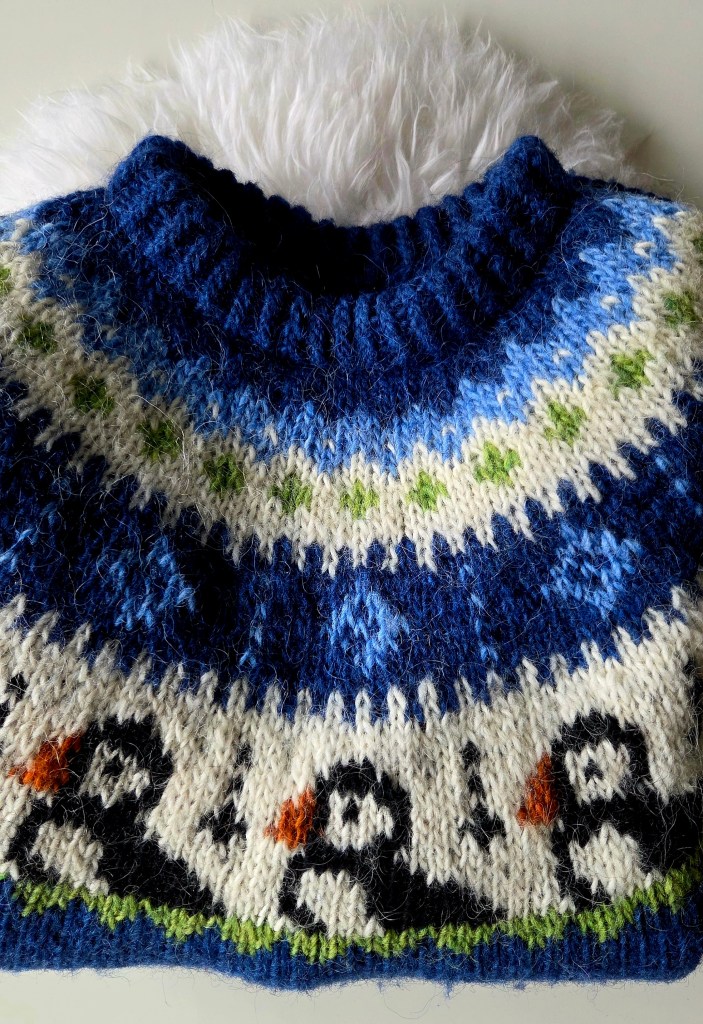
Iceland is an excellent place for knitters. Yes, Icelandic men knit too! Knitting is one of the country’s traditional leisure activities, and yarn shops can be found in almost every small town. The Icelandic wool sweater, decorated with a wide variety of patterns, has become an integral part of Iceland’s national cultural identity – almost an icon in its own right. In Icelandic, it is called a “lopapeysa”. The word “lopi” refers to unspun, single-ply sheep’s wool yarn, while “peysa” means sweater.
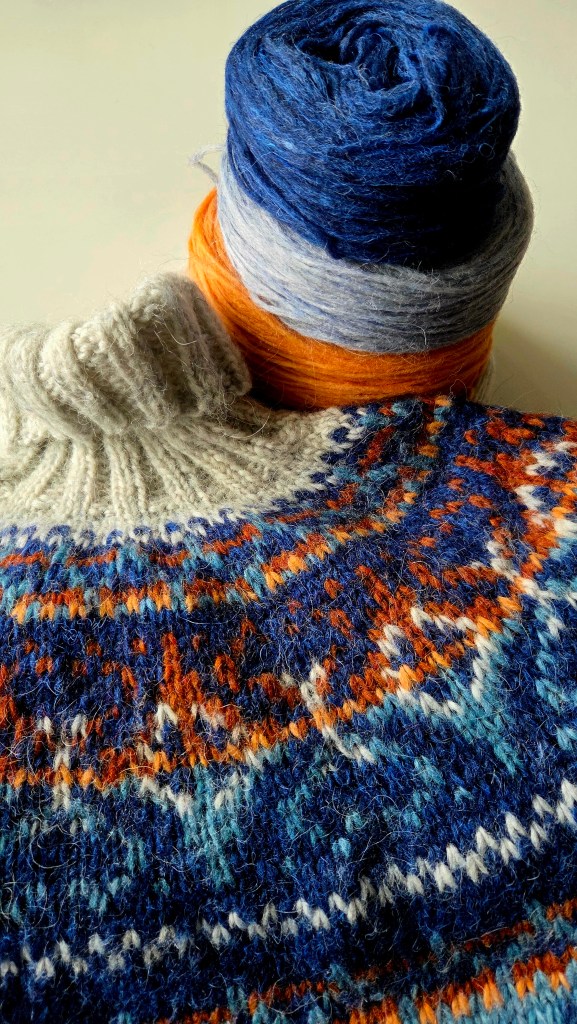
Only a sweater knitted entirely from Icelandic wool yarn – and preferably knitted in Iceland – can be called a lopapeysa. Other patterned sweaters made from different types of yarn cannot be referred to as “lopapeysur”.
About Sheep and Wool
In the 9th century, when the Vikings settled in Iceland, they brought domestic animals with them, including sheep. As often happens with animals living in isolation on an island, the Icelandic sheep population preserved and simultaneously developed characteristics that could not be found anywhere else in the world.
In Iceland’s harsh climate, the sheep developed a double-layered wool coat. The long, coarse, durable and water-repellent outer layer is called “tog”, while the short, warm, soft and fluffy inner, or undercoat, layer is called “þel”. When both layers are used together, they produce “lopi” yarn, which has unique qualities: it is lightweight, warm, durable and slightly water-repellent.
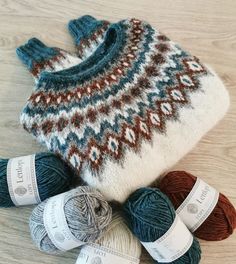
Lopi yarn is used unspun. This also makes the wool-processing procedure more efficient, saving both time and energy and allowing the wool to reach the market much more quickly. Garments knitted from lopi yarn are especially well suited to Iceland’s cold and damp climate. They provide excellent air circulation between the skin and the woollen garment and dry quickly, which is why Icelanders wear these sweaters throughout the year.
In earlier times, the two layers of wool were separated and used for different purposes. Separating them was difficult and time-consuming manual work. However, wool-processing technologies developed during the 1920s, and lopi emerged in all its modern splendour.
Lopapeysur became particularly popular during the 1940s and 1950s, when Iceland gained independence and textile artist Auður Laxness-Auður Sveinsdóttir Laxness, the wife of the famous writer Halldór Laxness – popularised the knitting of lopapeysur with geometric patterns. Auður drew inspiration from the traditional patterns of Norwegian, Sámi, Inca and Greenlandic cultures, creating her own artistically unique designs.
Icelandic wool yarn is not particularly suitable for sensitive skin because it can feel slightly “itchy”. Icelanders are very accustomed to this characteristic, as the slight itchiness also stimulates blood circulation. In addition, the wool becomes softer when the sweater is worn regularly. The more often it is worn, the softer the sweater becomes.
The Icelandic sheep is one of the oldest and purest short-tailed sheep breeds in the world. Icelandic sheep are highly independent, remarkably attuned to weather conditions and exceptionally good at finding their way through the natural landscape.
For centuries, sheep manure was used as fuel in kitchen hearths and as a source of smoke for smoking meat and fish. Icelandic sheep have fed and clothed the Icelandic people ever since the island was first settled. It can safely be said that, before electricity became available, Iceland would not have been suitable for permanent human habitation without its sheep.
Types of Icelandic Sheep-Wool Yarn
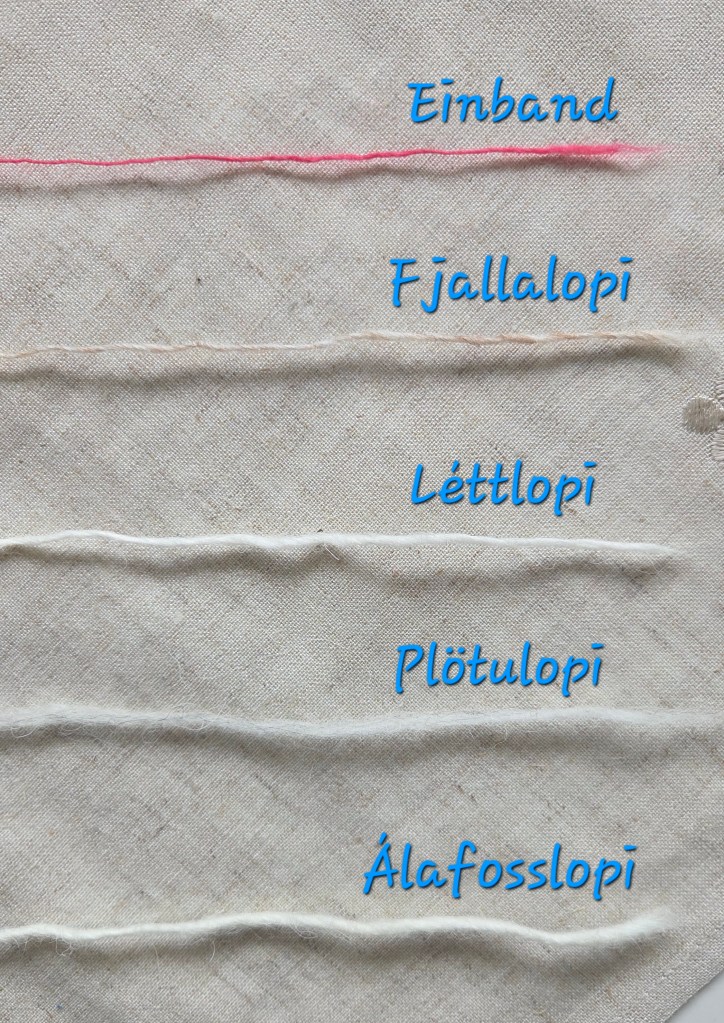
Álafosslopi – a thick, spun wool yarn and the oldest of the Icelandic wool-yarn varieties. It is suitable for sweaters that can be worn outdoors without an additional jacket.
Léttlopi – a finer and highly versatile yarn. It is half the thickness of Álafosslopi yarn. Garments made from Léttlopi can be worn both indoors and outdoors.
Fjallalopi – a new variety of yarn that is twice as fine as Léttlopi. It is suitable for thinner and lighter garments.
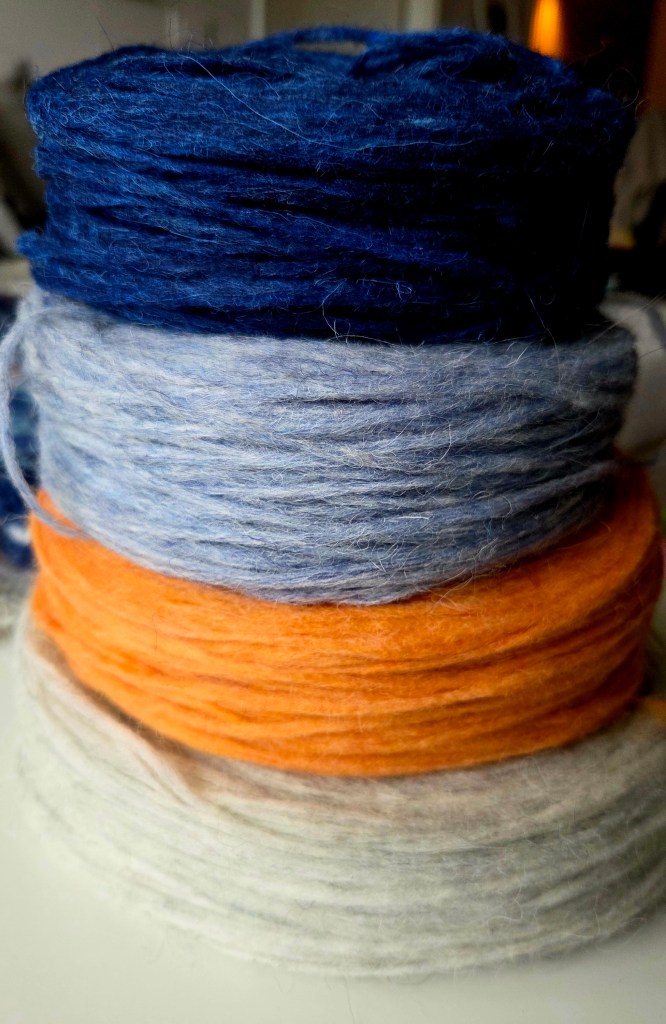
Plötulopi – a delicate, unspun and soft yarn that has been used for centuries more widely than any other yarn for knitting lopapeysur. It is most commonly knitted using two strands together, as a single strand is too delicate to knit with on its own.
Jöklalopi – twice as thick as Álafosslopi. It is excellent for thick, generously sized sweaters, blankets and rugs. Projects made with it knit up very quickly because the yarn is extremely thick.
Einband – a fine, spun yarn. It is suitable for scarves, lacework and lightweight knitted garments. It can be knitted using two or three strands together or combined with Plötulopi.
An old Icelandic saying, “Kindur kenna kulda”, states that “sheep teach us about the cold”. In other words, a person becomes stronger through hardship and learns how to survive in harsh conditions.
May we all enjoy wonderful knitting and wearing our lopapeysur!
Image Sources:
Personal archive
Literature Used:


Komentēt